
Search New York Property Records
New York property records are maintained by County Clerks in each of the state's 62 counties. The Office of Real Property Tax Services oversees property tax administration statewide, while County Clerks serve as the official custodians of deeds, mortgages, liens, and other recorded land documents. In New York City, the Automated City Register Information System provides free online access to property records for four boroughs. Assessment rolls, tax maps, and parcel data can be searched through county Real Property Tax Service offices. These records are public under the Freedom of Information Law and can be accessed in person, by mail, or online depending on the county.
New York Property Records Overview
Where to Find New York Property Records
County Clerks are the primary custodians of property records in New York. Each of the 62 counties has a Clerk's office that records deeds, mortgages, satisfaction pieces, assignments, powers of attorney, and various liens affecting real property. These offices maintain grantor and grantee indexes as required by Real Property Law Section 291, allowing searches by the names of parties to a transaction. Land records in some counties date back to the colonial period, with Albany County holding documents from 1683.
The Office of Real Property Tax Services (ORPTS) operates under the Department of Taxation and Finance. ORPTS provides guidance to local assessment officials, maintains equalization rates, and oversees the Real Property System used by assessors across the state. It does not hold recorded deeds or mortgages. Instead, ORPTS focuses on property tax administration, STAR program management, and assessment standardization. Municipal profiles published by ORPTS contain statistical data about property values, tax rates, and assessment rolls for each assessing unit in New York.
In New York City, the Department of Finance maintains property records through ACRIS (Automated City Register Information System). ACRIS covers Manhattan, the Bronx, Brooklyn, and Queens with records from 1966 to the present. Staten Island property records are handled separately through the Richmond County Clerk. No registration is required for basic ACRIS searches. Electronic copies of recorded documents can be downloaded at no charge when printed from a personal computer.
Note: County Clerks hold recorded land documents like deeds and mortgages. County Real Property Tax Service offices maintain tax maps and assessment rolls. These are separate offices in most counties.
How to Search Property Records Online
Several online tools are available for searching New York property records. The type of record you need determines which system to use. Recorded documents like deeds and mortgages are found through County Clerk search portals. Assessment and tax data comes from Real Property Tax Service databases.
ACRIS is the most comprehensive online system for property records in New York City. You can search by address, owner name, or Borough-Block-Lot number. The system shows deeds, mortgages, liens, and other recorded instruments. Cover pages, tax forms, and transfer tax calculations are also available through ACRIS. The NYC Property Information Portal adds an interactive GIS map layer showing lot lines, block and lot numbers, street names, and easements. Certified tax map copies cost $10 per map through this portal.
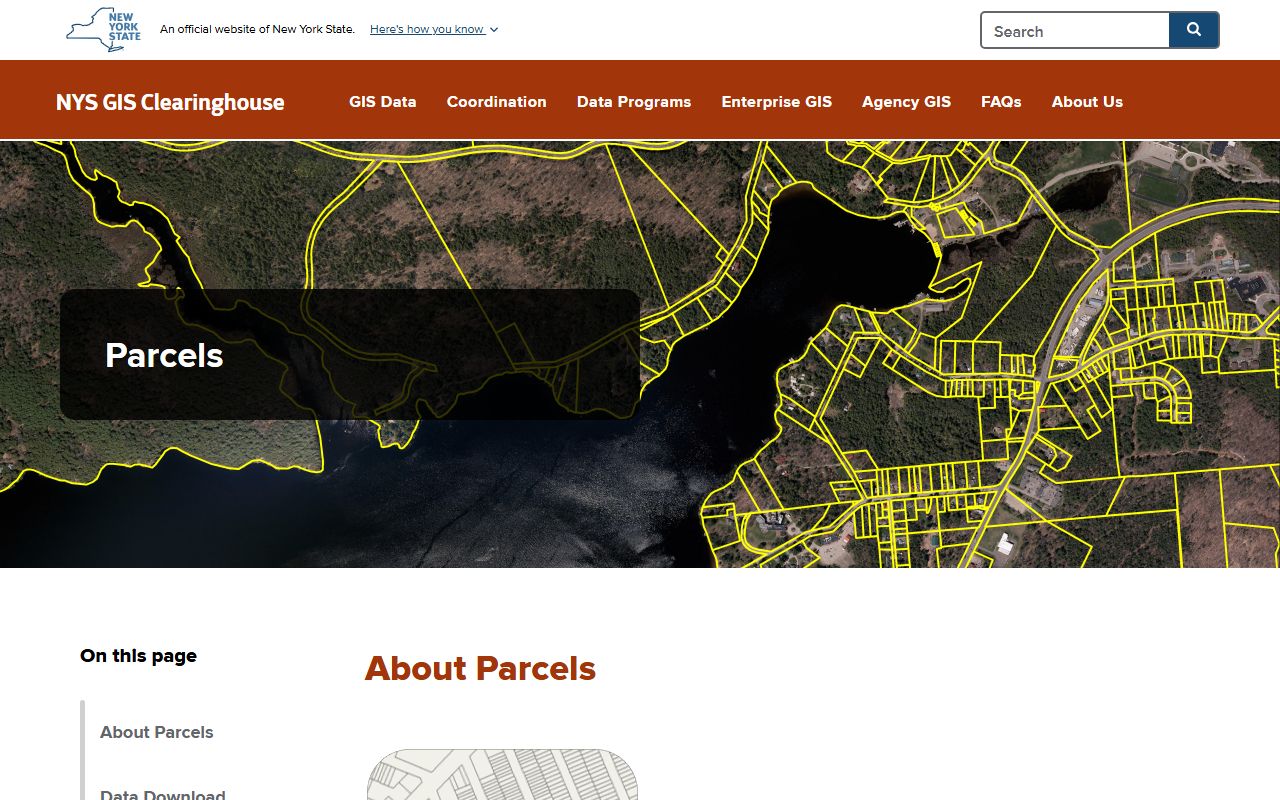
Outside New York City, online access varies by county. Some counties offer free web portals for searching land records by party name or document type. Others use subscription services like SearchIQS. Most counties provide free online access to assessment data through Image Mate Online or similar platforms hosted by their Real Property Tax Service offices. The Statewide Parcel Map Program provides standardized parcel data for 36 counties with publicly available boundary information, and parcel centroid data for all 62 counties.
For court records related to property, the New York State Unified Court System provides access to foreclosure proceedings, partition actions, and judgment liens. Supreme Court handles most real property litigation. Surrogate's Courts in each county maintain probate records that often involve property transfers through estates.
Types of Recorded Land Documents
Property records in New York include a wide range of recorded instruments. The County Clerk records each document and assigns it a liber and page number for indexing. Under Real Property Law Section 291, recording an instrument provides constructive notice to all subsequent purchasers and lien holders. Documents that are not recorded remain valid between the original parties but lose priority against later recorded instruments from good faith purchasers.
The most common types of property records filed with County Clerks include deeds conveying ownership, mortgages securing loans against real property, satisfaction pieces releasing mortgage liens, and various types of statutory liens. Each conveyance requires a TP-584 Combined Real Estate Transfer Tax Return and an RP-5217 Real Property Transfer Report to be filed at the time of recording. These forms generate data used by ORPTS for equalization rate calculations and market analysis statewide.
Real Property Tax Service offices maintain a different set of property records. Tax maps show parcel boundaries, dimensions, and identification numbers. Assessment rolls list every property in a municipality with its assessed value, property class, exemptions, and taxable amount. These rolls are published in tentative form each year, with a grievance period for owners to contest values before the final roll is adopted. Under Real Property Tax Law Article 5, Boards of Assessment Review hear complaints during this grievance period. Property owners may also pursue judicial review through Article 7 proceedings in Supreme Court.
Property Records and Tax Assessment
Property assessment in New York is handled at the local level. Cities, towns, and some villages maintain their own assessment rolls. County Real Property Tax Service offices provide oversight, technical support, and tax map maintenance for these local assessing units. ORPTS publishes equalization rates that measure assessment levels relative to full market value in each jurisdiction.
The STAR program (School Tax Relief) is a major property tax benefit administered by the Department of Taxation and Finance. Basic STAR applies to primary residences with combined owner income of $500,000 or less. Enhanced STAR serves homeowners age 65 and older with income under $92,000. New homeowners register with the Tax Department to receive STAR credits, which are issued as payments rather than exemptions for new applicants. The program saves homeowners hundreds of dollars each year on school taxes.
Other property tax exemptions include those for veterans, senior citizens, persons with disabilities, agricultural properties, and religious or charitable organizations. Under Real Property Tax Law Article 4, each exemption type has specific eligibility criteria and application deadlines. Most exemption applications must be filed with the local assessor by March 1 each year. The State Board of Real Property Tax Services serves as the quasi-judicial body that hears assessment disputes at the state level.
Recording and Transfer Requirements
Recording a document with the County Clerk requires specific fees and forms. The base recording fee is $45 plus $5 per page, with additional charges for cross-references and cover pages. Residential deed recordings carry an extra $10 notice fee under Real Property Law Section 291, which funds a notification program alerting owners when documents are recorded against their property.
New York imposes a real estate transfer tax on conveyances where consideration exceeds $500. The state rate is $2 per $500 of consideration. New York City adds its own transfer tax ranging from 1% to 2.625% depending on property type and sale price. The "Mansion Tax" applies to residential sales of $1 million or more at a rate of 1%, paid by the buyer. Mortgage recording tax is also due when recording a mortgage, calculated at $0.50 per $100 of mortgage debt plus additional amounts that vary by county and city. The NYC 311 service provides detailed guidance on recording fees and procedures for New York City properties.
All documents must be properly acknowledged before a notary public or other authorized officer under Real Property Law Section 294. The County Clerk endorses each recorded instrument with the date and time received, the book and page where filed, and references to any related prior instruments under Section 319. eRecording is available in many counties through authorized vendors like Simplifile, allowing electronic submission of documents around the clock.
Property Records Access Under New York Law
Property records in New York are public. The Freedom of Information Law (FOIL), found in Article 6 of the Public Officers Law, grants the public a right to access government records. This includes property assessment records, tax maps, and recorded land documents maintained by County Clerks and Real Property Tax Service offices. Agencies must respond to written FOIL requests within five business days, or within 20 business days if circumstances require more time.
Copy fees under FOIL cannot exceed 25 cents per photocopy page. County Clerks typically charge $1 per page for regular copies of recorded documents and $5 per document for certified copies. Certified copies carry the official seal and are accepted for legal purposes such as title closings and court proceedings. In New York City, ACRIS copies printed from a personal computer are free, while certified copies ordered through City Register offices cost $4 per page.
The Department of State, Division of Corporations maintains UCC (Uniform Commercial Code) filings for personal property liens, including fixture filings that may affect real property. UCC search certificates cost $25 for a specific debtor search. These filings are separate from mortgages recorded with County Clerks but may be relevant for comprehensive property lien searches. The NYS Historic Newspapers archive provides additional research context with deed notices, foreclosure announcements, and estate proceedings published in local papers across multiple centuries.
Browse New York Property Records by County
Each of New York's 62 counties has a County Clerk that records deeds, mortgages, and other land documents. Select a county below for local contact details, recording fees, and search tools for property records in that area.
Property Records in Major New York Cities
Residents of major cities access property records through the County Clerk in their county. Select a city below to find which county handles property records for that area.